The Petition Before the Platform
The petition before the platform reveals how communities made collective claims legible. Learn how petition traditions shaped civic authority and public voice.
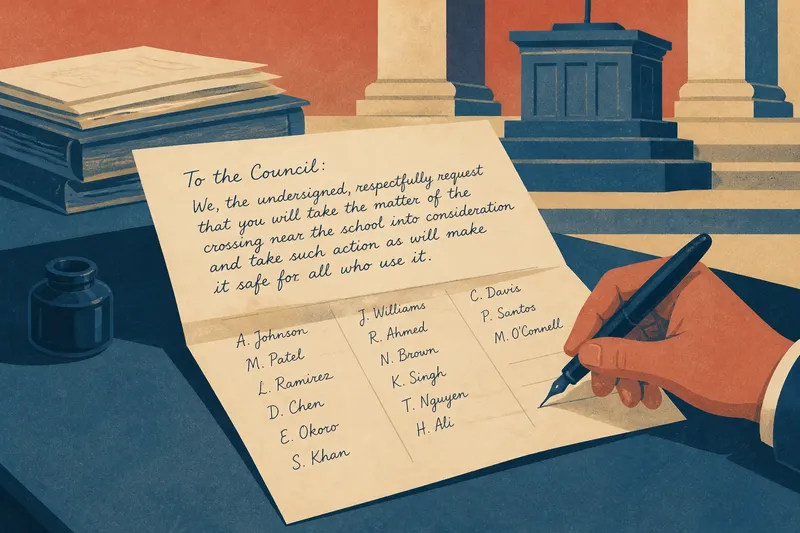
A folded petition rests on a clerk’s desk, its handwritten names gathered beneath a request for relief. Long before an online form could circulate through a neighborhood, people used petitions to make a claim visible to someone with authority. The petition before the platform is not only a story about changing tools; it is a history of how ordinary people sought recognition from institutions that might otherwise overlook them.
Petitions made personal claims visible as public concerns
Petitions have long served as a formal way to ask a ruler, legislature, council, or other authority to consider a grievance or requested change. Their civic force came partly from their form: a written appeal could be carried, read, presented, and preserved. A single person could petition, but a document bearing many names could show that a concern extended beyond one household.
That visibility did not make a petition a vote or a command. It presented a claim for consideration. The recipient still decided how to respond, and the ability to submit an appeal did not mean that every petitioner had equal access to officials or equal influence over their decisions.
The history matters because it keeps the instrument in proportion. A petition can help a community articulate what it wants recognized, but the signatures do not settle the underlying dispute or speak for people who did not sign.
The petition’s history is a history of access and exclusion
Petitioning has appeared in many political systems, but the people permitted to address authority, the channels available to them, and the weight given to their requests have varied. Formal rights to petition could coexist with social barriers: people might lack time, literacy, recognized standing, or safe access to those who received appeals. Institutions could accept a document while disregarding the people behind it.
Collective petitions also changed the meaning of an individual grievance. A concern about a local rule, a public service, or an official decision could be framed as a matter affecting a wider community. That framing could help people identify a shared issue, though it could also conceal differences among them. A list of names is evidence of support for the stated request, not a complete account of everyone’s reasons or circumstances.
Reading petition history this way avoids treating the form as inherently democratic. Its significance depends on who can use it, what the recipient is obliged or willing to do, and whether the request becomes part of a decision-making record.
Paper and online petitions preserve different parts of the act
With a paper petition, the wording and signatures could travel together from hand to hand. The physical sheet made the appeal tangible and could create a moment for conversation. It also depended on someone keeping the document intact and getting it to the right recipient.
An online petition can circulate beyond the place where the request began, and its text may remain easy to share. But a digital count does not automatically tell a reader how signers encountered the request, whether the wording changed, or how the intended institution treats submissions through that channel. The interface may change the scale and speed of circulation; it does not settle the petition’s political meaning.
Before gathering support, check the recipient’s published instructions. Some bodies distinguish an informal public appeal from a formal petition or filing. If the rules are unclear, ask the relevant office rather than assuming that a particular format has official standing.
What is not worth the effort is making a petition appear authoritative through seals, ornate typography, or inflated language. A plainly stated request and an accurate account of its purpose matter more than borrowed ceremony.
A clear request preserves what the signers are supporting
State the requested action near the beginning. Identify the place, service, or decision involved, and distinguish the concern from the remedy. “The crossing feels unsafe” describes a concern; asking the transportation department to review visibility and crossing conditions names an action it might consider.
Say who is organizing the petition and what will happen to signers’ information. Collect only what the stated purpose requires, and do not imply that signing means agreement with proposals beyond the text. If the wording changes substantially, treat the revised request as a new appeal rather than assuming earlier signatures apply.
Imagine neighbors are concerned about a crossing beside a school and begin with the phrase “make the street safe.” They revise it to ask the city transportation department to review visibility and crossing conditions at the named location, then add a short explanation of the concern during school arrival. An organizer reads the final wording aloud at a library gathering, answers questions, and collects signatures only after people have had a chance to consider it. The resulting document supports one defined request; it does not claim that signers agree on a specific redesign or that the city has accepted the appeal.
What should readers know about petition history?
Why did communities use petitions?
Petitions gave people a written means to present grievances or requests to an authority. When several people joined the same appeal, the document could make shared concern more visible without turning it into a binding decision.
Did a petition give signers political power?
It offered a way to address an institution, but its practical influence depended on the recipient’s rules, choices, and willingness to respond. Access to petitioning also varied, so the existence of the form did not mean all voices carried equal weight.
How did online petitions change the tradition?
Online forms made it easier to share a request across distance and keep its wording available. They changed how support was gathered, but did not by themselves establish that a recipient would treat the appeal as a formal submission.
What does a petition’s signature count represent?
It represents the people who signed the stated request under the conditions in which it was presented. It does not establish that every signer has the same reasons, that nonsigners disagree, or that the list speaks for an entire community.
Petition records show what a community asked authority to consider
Petitions are useful historical records because they preserve the language people chose to address power. They can show how a grievance was framed, which institution was asked to act, and how supporters made their claim public. They cannot, on their own, reveal every private motive or the full range of opinion around an issue.
That distinction is useful when considering the petition before the platform today. The medium may be a sheet passed at a gathering or a form shared online, but the enduring question is what the appeal makes legible: a specific request, addressed to an identifiable authority, in the words its signers actually chose to support.